Overview
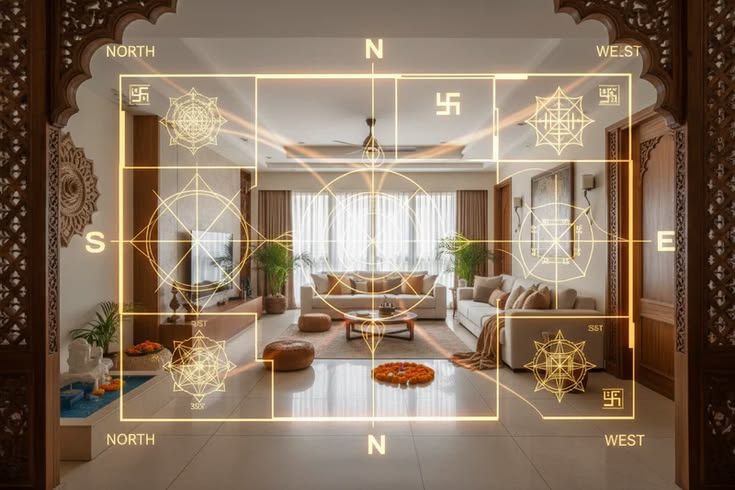
This guide looks at how commercial Vastu principles apply to offices, factories, showrooms, and other business spaces in Dubai. It covers entrance and layout guidance, desk and machinery placement, common mistakes business owners make, and how these ideas can work alongside modern building codes and interior design in the UAE.
If you run a business in Dubai, you’ve probably noticed something odd. Two shops on the same street, similar footfall, similar products, yet one always feels busier, calmer, and more productive than the other. Business owners often chalk it up to luck or marketing. But many also start looking into commercial vastu once they notice these patterns repeating across their properties.
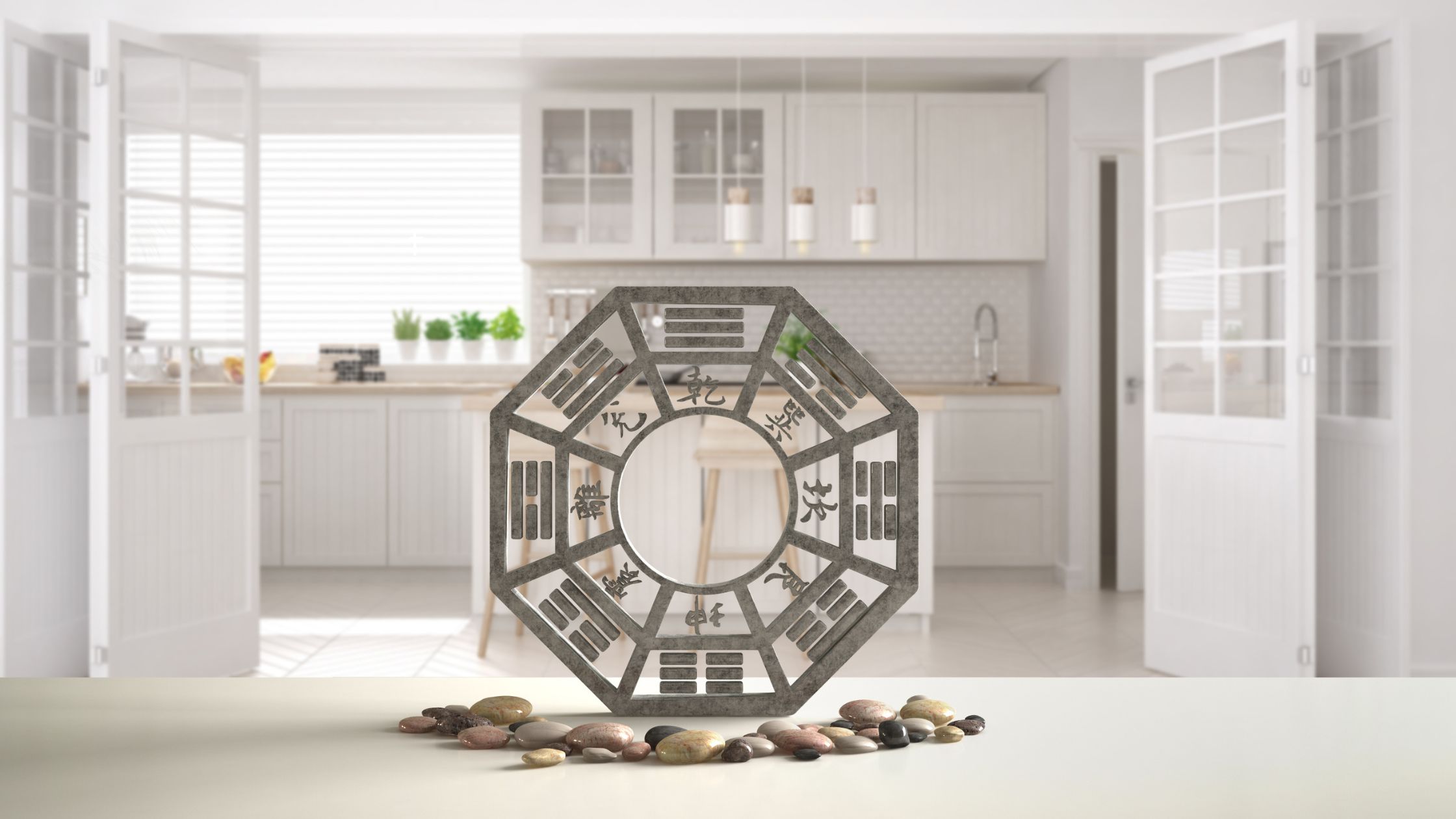
Vastu Shastra is an ancient Indian system of spatial design that focuses on how the layout, direction, and energy flow of a building affect the people who use it. While it originated in residential architecture, it has long been applied to workplaces, factories, and commercial buildings too.
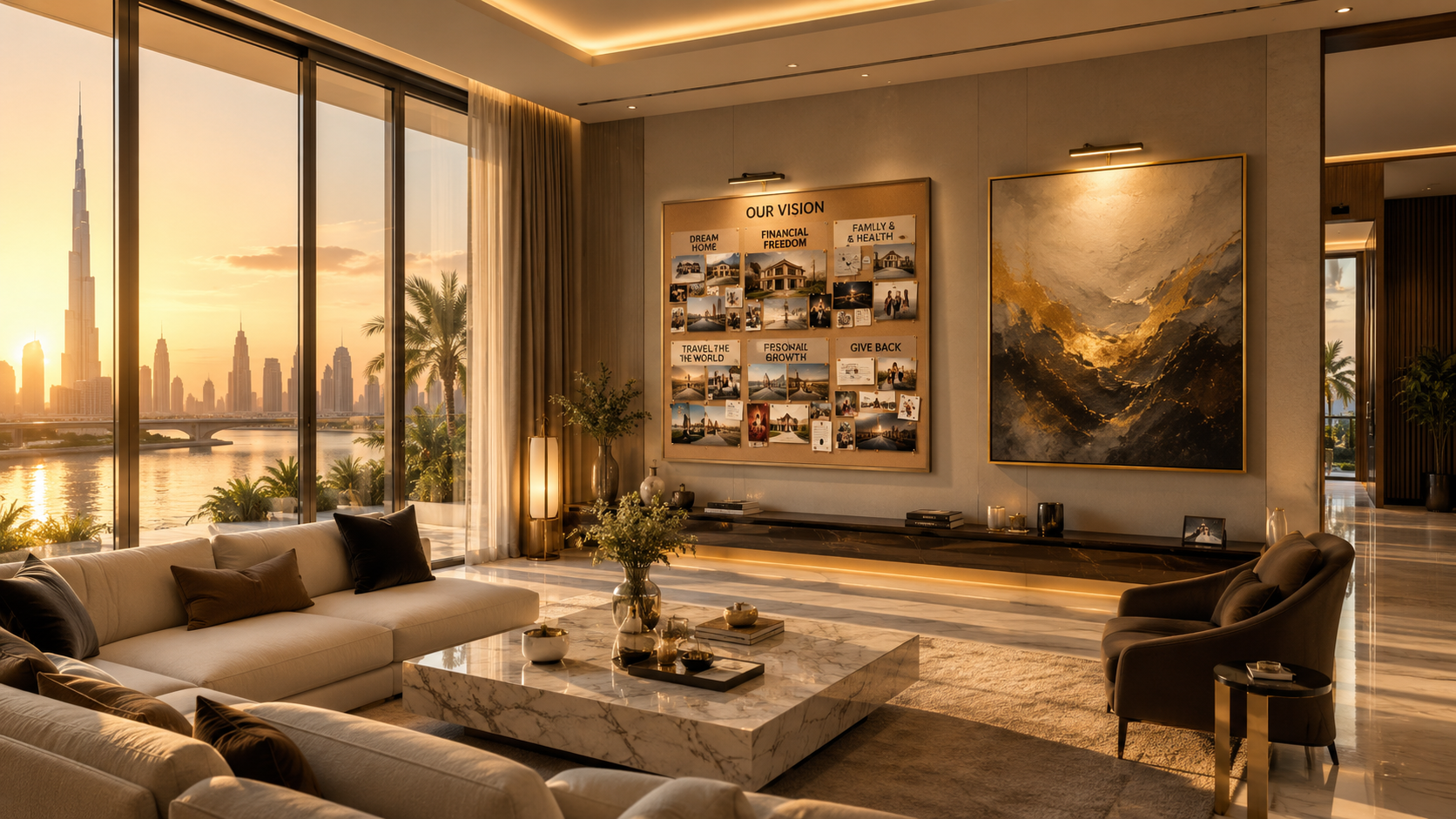
Dubai’s business landscape, with its mix of high-rise offices, industrial units in areas like Jebel Ali and Al Quoz, and retail spaces across the city, makes this a relevant topic for many property owners, architects, and investors who want their spaces to function well on every level, not just the structural one.
This article breaks down what commercial vastu actually involves, how it differs from home vastu, and practical points worth considering whether you’re designing a new office or reworking an existing factory floor.
What Is Commercial Vastu, Exactly ?
Commercial vastu applies the same core ideas as residential vastu: direction, element balance, and spatial flow, but adapts them to spaces where people work rather than live.
The focus shifts slightly:
- Homes are designed around rest, family, and personal wellbeing.
- Commercial spaces are designed around productivity, decision-making, cash flow, and how employees and clients move through the space.
So while a home might prioritize where the bedroom or kitchen sits, a commercial vastu plan looks at where the entrance, reception, cash counter, workstations, and storage areas are positioned relative to each other.
Why Business Owners in Dubai Are Paying Attention to Commercial Vastu in Dubai
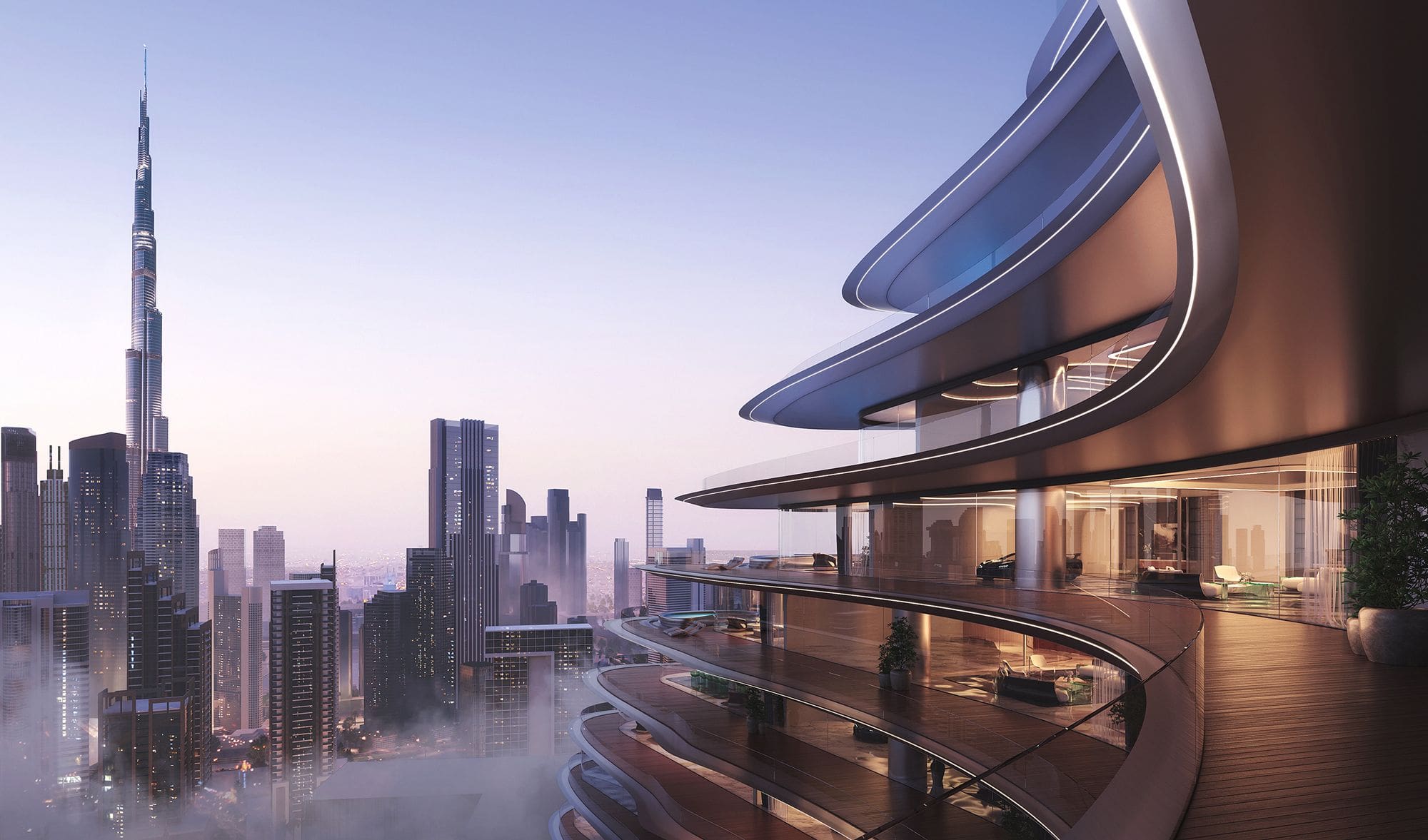
Dubai’s commercial real estate is diverse: glass-tower offices in Business Bay, warehouses in industrial zones, and retail units in malls and standalone buildings. Many business owners here come from backgrounds where vastu is a familiar part of property decisions, and they carry that thinking into their commercial investments too.
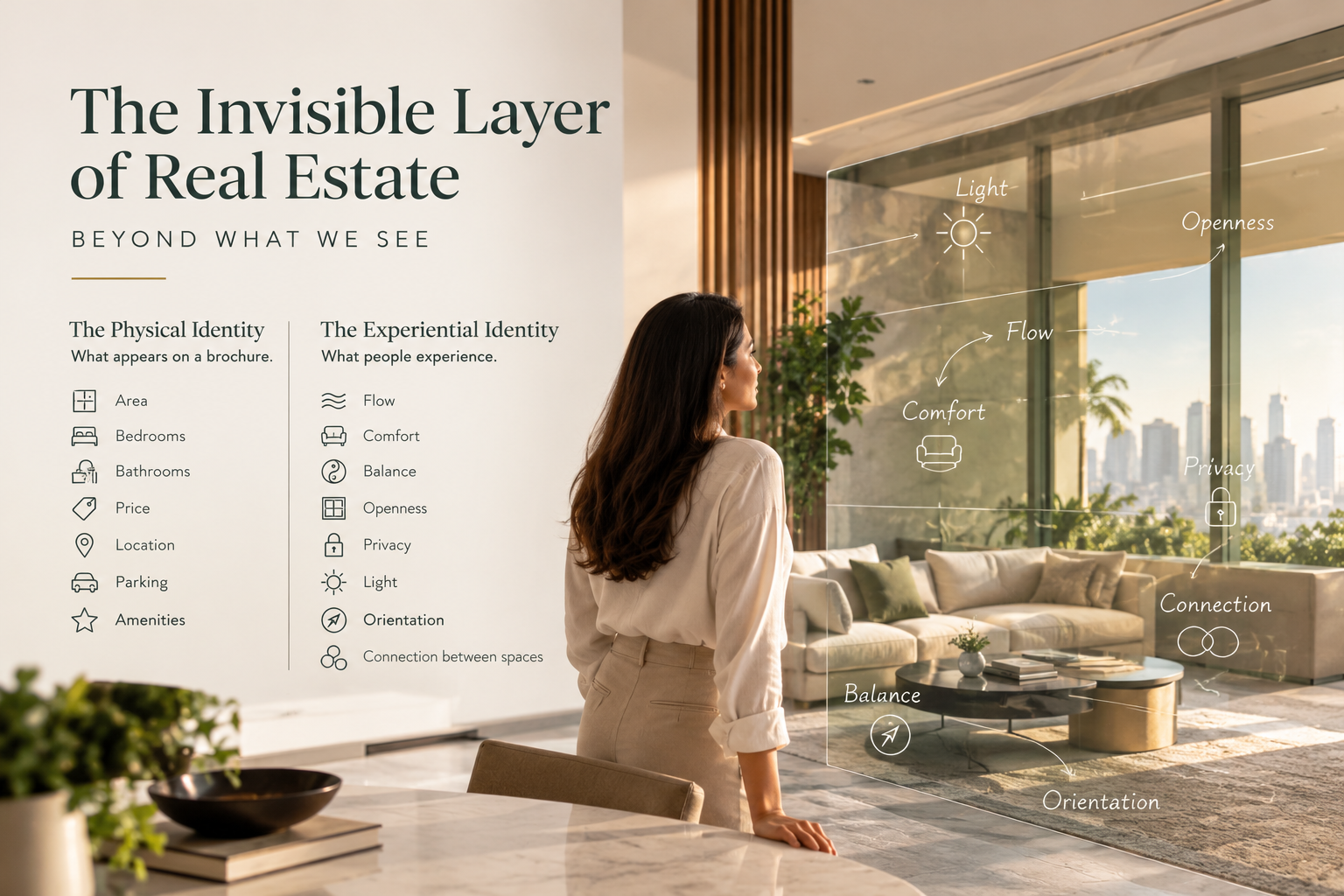
There’s also a practical angle. Even without getting into the traditional beliefs behind vastu, several of its principles overlap with good workplace design:
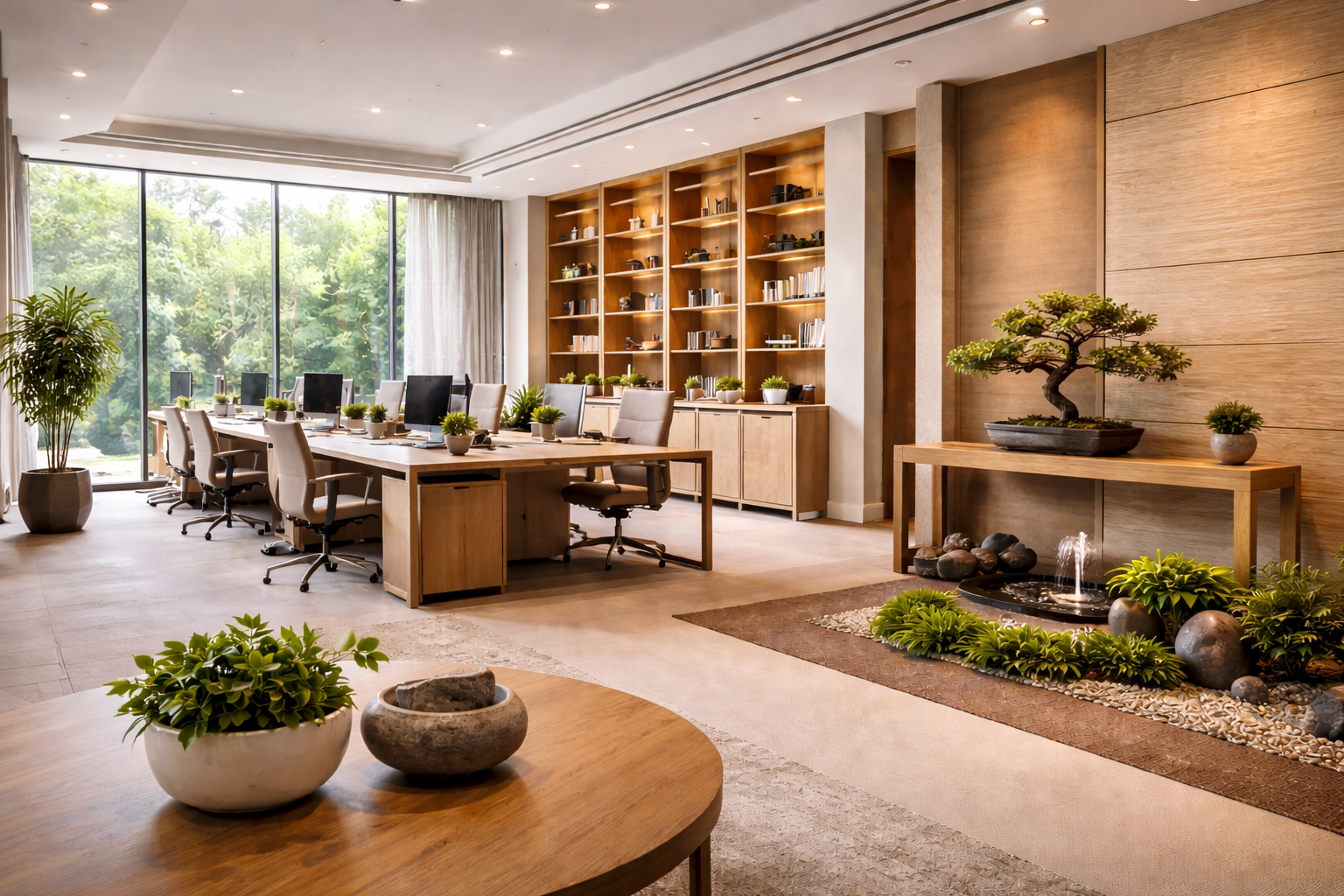
- Natural light near workstations reduces eye strain and can improve focus.
- Clear walkways reduce accidents in warehouses and factories.
- A well-placed reception desk improves the first impression for visiting clients.
- Ventilation and airflow affect comfort and air quality on a factory floor.
So whether someone approaches commercial vastu from a cultural standpoint or a purely functional one, many of the same design choices end up making sense.
Core Vastu Principles for Offices
1. Entrance Direction
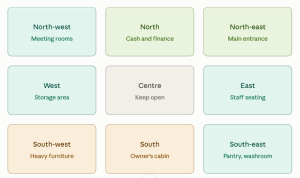
The main entrance is considered one of the most important elements in Vastu. For offices, a north, east, or north-east facing entrance is generally preferred, as these directions are associated with the morning sun and are believed to bring positive energy and growth opportunities.
If your office entrance faces another direction, this isn’t something you need to change structurally. Adjustments like keeping the entrance well-lit, clutter-free, and welcoming can help balance this.
2. Seating Arrangements
Where people sit affects both energy flow (in vastu terms) and practical workflow:
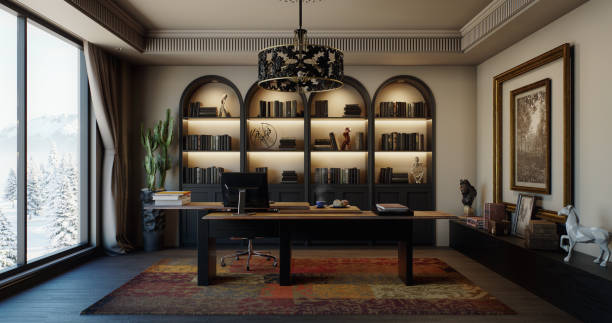
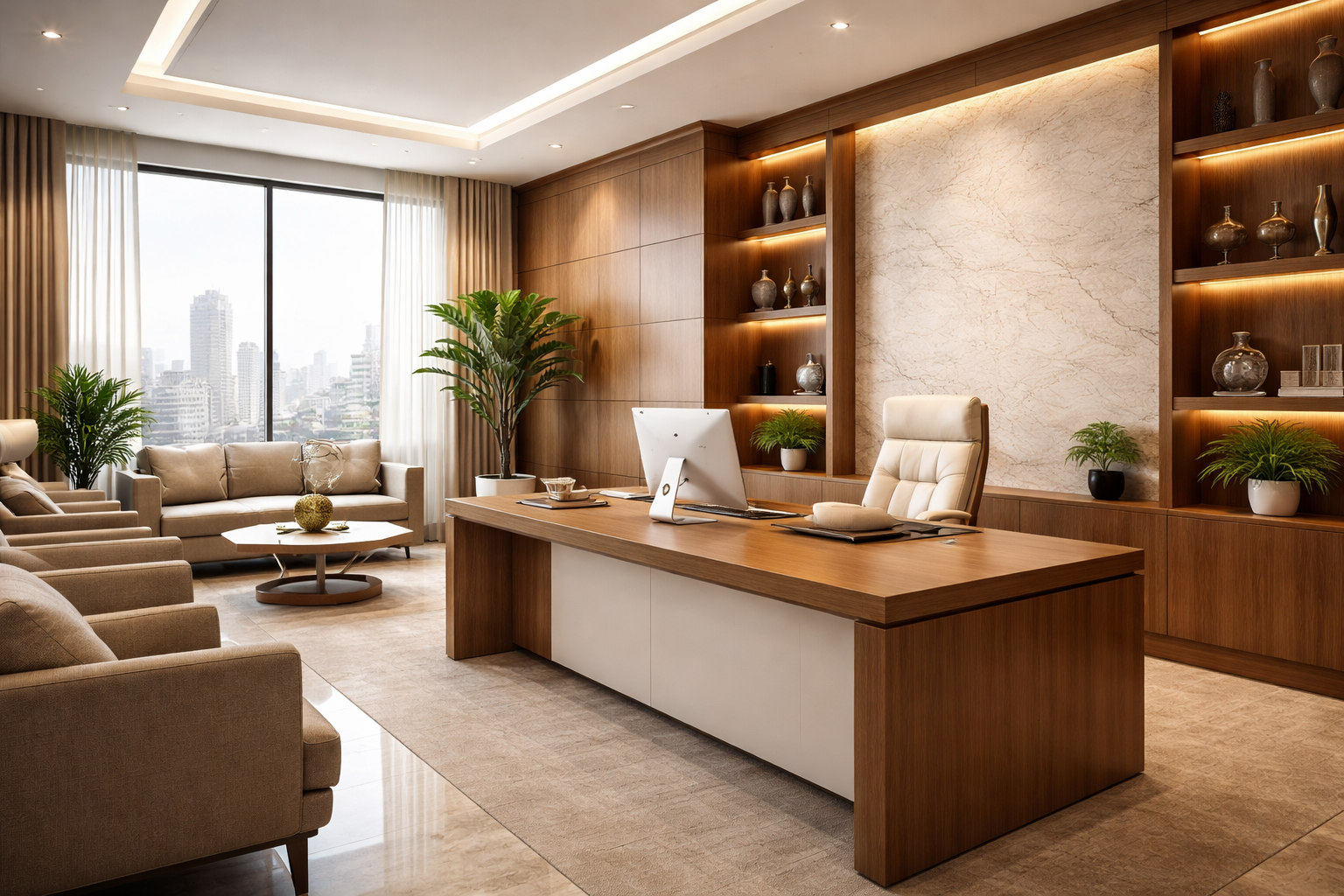
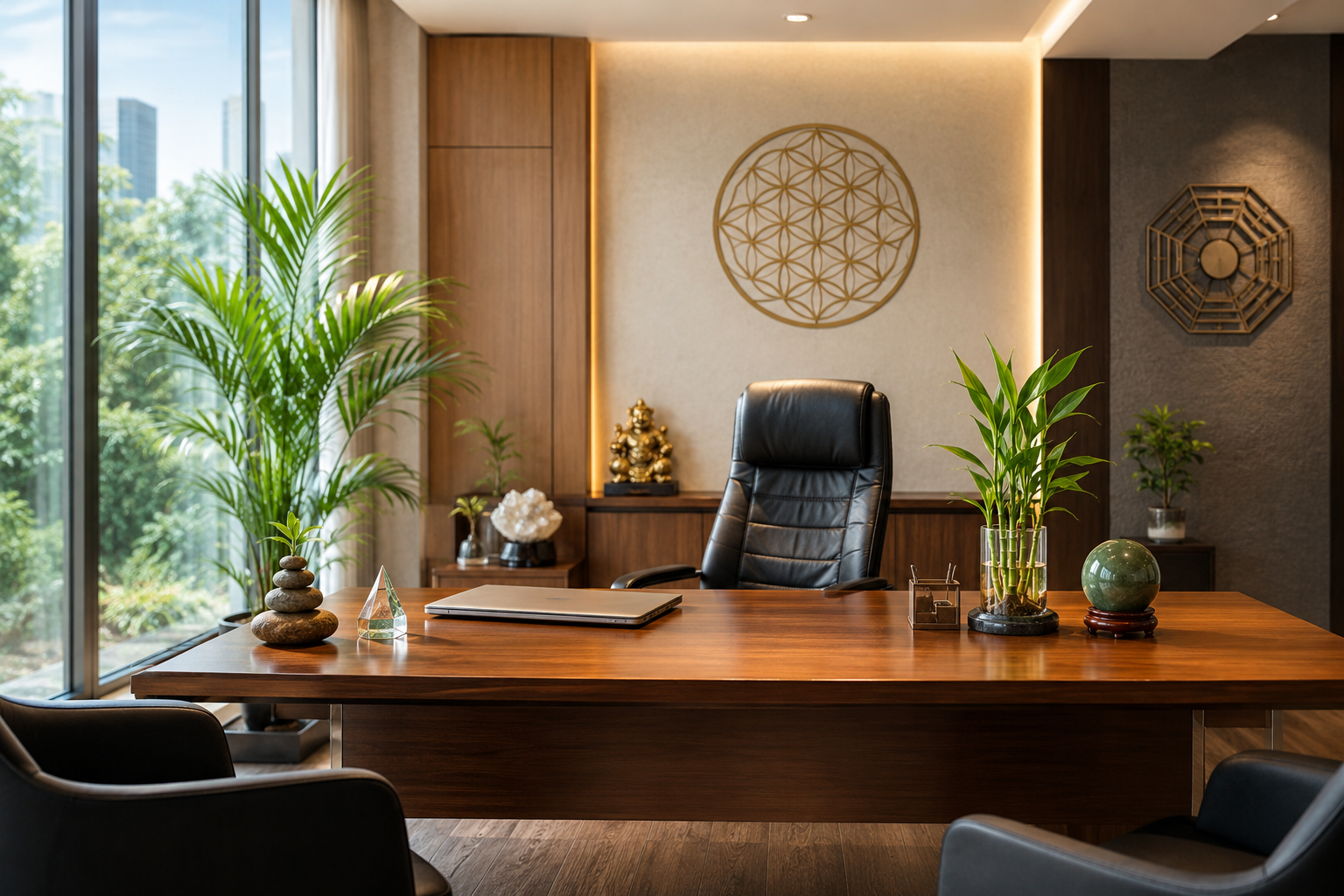
- Business owners and senior management often do best facing east or north, as this is thought to support clear decision-making.
- Employees generally work well facing east or north as well, since this direction is linked with productivity and focus.
- Avoid seating anyone directly facing a wall with their back to the main entrance, as this can create a sense of being “on edge” throughout the day — a concern that’s as much about psychology as it is about vastu.
3. Cash Counters and Finance Sections
For retail businesses, the cash counter placement matters. It’s generally recommended to place it in the south or west part of the store, with the cashier facing north or east while handling transactions.
4. Reception and Waiting Areas
The reception area sets the tone for anyone walking in. In Vastu terms, this space should ideally be near the entrance, well-lit, and positioned in the north or east zone of the office. A cluttered or dimly lit reception isn’t just a vastu concern it’s simply not great for business either.
Vastu for Factories and Industrial Units
Factory Vastu differs quite a bit from office vastu because the priorities shift toward machinery, storage, and worker safety.
Machinery Placement
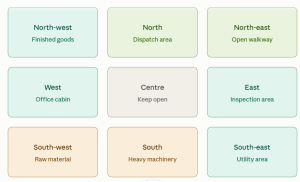
Heavy machinery is generally recommended in the south or south-west zones of a factory. These directions are considered stable and grounding in vastu, which aligns well with the practical need to keep heavy equipment on solid, well-supported flooring.
Raw Material and Storage Areas
Storage of raw materials typically works best in the south-west section, while finished goods ready for dispatch are often kept closer to the north or north-west, nearer to the exit points.
Worker Safety and Movement
Open, unobstructed pathways in the north-east zone are often recommended, both for vastu reasons and simple safety logic. this is usually where natural light and ventilation are strongest, making it a sensible area to keep clear for movement.
Example: A Mid-Sized Manufacturing Unit
Consider a garment factory in an industrial zone. If the cutting and stitching machines are placed near the entrance with little natural light, workers often report fatigue faster. Repositioning heavy equipment toward the south-west, with the entrance and inspection areas kept open toward the north-east, tends to improve both movement flow and light exposure a change that benefits daily operations regardless of whether you view it through a vastu lens or a workplace-efficiency one.
Common Mistakes to Avoid in Commercial Spaces
- Overcrowded entrances — Piling storage boxes or furniture near the main door blocks both energy flow and physical movement.
- Toilets near the main entrance or north-east zone — This is considered one of the more significant vastu concerns in commercial layouts.
- Irregular-shaped cabins — Cutting into a room’s shape with odd-angled partitions is thought to disturb the balance of a workspace.
- Ignoring the center of the space (Brahmasthan) — The central area of a floor plan is traditionally kept open and free of heavy structures like pillars, staircases, or storage units.
- Poor lighting in work zones — Vastu emphasizes natural light, and its absence is one of the easiest issues to fix in most Dubai offices given the region’s abundant sunlight.
Can Vastu Be Applied to Existing Buildings?
Yes, and this is one of the most common questions from business owners who’ve already leased or purchased a commercial space. Not every layout can be restructured, especially in high-rise towers with fixed floor plans. In these cases, vastu consultants typically work with:
- Furniture and desk repositioning
- Color choices for walls and interiors
- Placement of mirrors, plants, or specific objects believed to balance energy
- Lighting adjustments
These changes tend to be more realistic for tenants who don’t have control over structural elements like entrance direction or wall placement.

Vastu and Modern Architecture: Finding a Balance
It’s worth being upfront about something: not every Vastu-recommended layout will align perfectly with Dubai’s building codes, tower designs, or a company’s operational needs. A good approach treats Vastu as one input among several alongside fire safety regulations, accessibility requirements, and practical workflow rather than a rigid rulebook that overrides everything else.
Architects and interior designers working on commercial projects in Dubai often find it useful to loop in vastu considerations early in the design phase, when adjustments are far easier and cheaper to make than after construction is complete.
Frequently Asked Questions
- What is the best direction for an office entrance according to vastu? North, east, and north-east are generally considered the most favorable directions for a commercial entrance, as they align with morning sunlight and are associated with growth and opportunity.
- Does vastu apply to rented office spaces too? Yes. While tenants can’t usually change structural elements like entrance direction, adjustments to furniture placement, seating direction, and interior elements like color and lighting can still be made.
- Where should the cash counter be placed in a retail shop? The south or west zone is typically recommended for cash counters, with the cashier ideally facing north or east during transactions.
- Is factory vastu different from office vastu? Yes. Factory vastu focuses more on machinery placement, raw material storage, and worker movement, while office vastu centers on seating direction, reception placement, and workspace layout.
- Can vastu improve business performance? Vastu is best viewed as a design philosophy that supports better light, airflow, and spatial organization — factors that can contribute to a more comfortable and functional workspace. It isn’t a guarantee of business results, but many owners find the underlying design logic practical.
Whether you’re setting up a new office in Business Bay, planning a factory floor in Jebel Ali, or simply rearranging an existing retail space, commercial vastu offers a framework worth considering alongside standard architectural and interior design practices. The goal isn’t to overhaul every square foot of your property, but to make thoughtful, informed choices about how a space is organized choices that often turn out to be practical wins for daily operations, regardless of which lens you view them through.